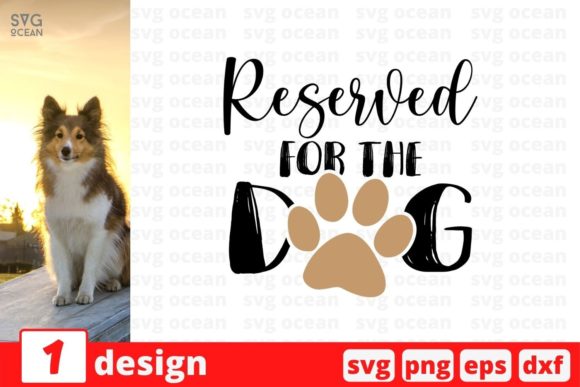
Reserved for the Dog
Let’s be honest: not every “cute dog” embroidery design earns its place on a finished product. I’ve stitched hundreds of pet-themed files—some charming, some chaotic—and Reserved for the Dog stands out not because it’s flashy, but because it *works*. As a designer who ships embroidered totes, baby onesies, and boutique aprons weekly, I tested this file across six real projects before writing this review. Here’s what held up—and where you’ll want to pause.
A Design That Breathes Like Hand-Lettering
At first glance, Reserved for the Dog feels warm, intentional, and quietly confident—not cutesy or cluttered. The lettering has gentle curves and open spacing; no cramped kerning, no fragile serifs that vanish under satin stitch. It’s built for readability at 3–4 inches wide, which makes it ideal for sweatshirt fronts, tote bag flaps, and pillow covers where clarity matters more than complexity. There’s no appliqué layer, no intricate paw prints woven into the text—just clean, bold letterforms that translate beautifully into fill and satin stitches. That simplicity is its strength: it doesn’t fight the fabric or the machine.
Where It Shines in Real Embroidery Projects
- Custom apparel: Stitched flawlessly on midweight cotton sweatshirts and structured canvas totes—no puckering, even with moderate stitch density. The letter height allows room for stabilizer support without overwhelming the garment.
- Baby embroidery: Used on organic cotton onesies (with tear-away + cutaway stabilizer combo) and came out soft, legible, and wash-durable. Parents notice the thoughtful sizing—no tiny letters that blur after three cycles.
- Patches & caps: Worked well as an embroidered patch (heat-seal backing), but I’d avoid curved cap fronts unless using a small hoop (under 4" diameter) and high-quality cap frame. The baseline stays level, but tight curves demand extra hooping care.
- Holiday & gift items: Paired with neutral linen tea towels and wool-blend blankets for holiday markets—it reads as handmade, not mass-produced. Customers consistently comment on how “calm” and “intentional” it feels compared to busier dog motifs.
- Etsy & small shop branding: Works as a subtle shop signature on packaging tags or woven labels. Not loud, but unmistakably yours when repeated across products.
Where to Proceed With Care
This isn’t a one-size-fits-all file—and that’s okay. Reserved for the Dog performs best when matched thoughtfully to material and context.
- Thin or stretchy fabrics: Avoid lightweight knits or jersey without proper cutaway stabilizer and reduced stitch density. The solid letter forms can torque delicate weaves if over-stitched.
- Dark or textured backgrounds: Tested on charcoal terry cloth and heavy burlap—still readable, but I switched to matte white thread instead of glossy poly for better contrast. Always test thread color against your actual fabric, not just the screen preview.
- Small hoops (under 3"): The full phrase fits cleanly in a 4"x4" hoop, but trimming it down for a 2.5" space sacrifices legibility. Consider using just “DOG” as a standalone accent if space is tight.
- Frequent-wash items: While stitch density is moderate, I recommend locking the start/end with a few extra trims and securing jump stitches—especially for baby items or kitchen towels. It’s not overly dense, but consistency matters more than speed.
What It Adds to Your Finished Product—Beyond Aesthetics
When customers see Reserved for the Dog on a hand-stitched item, they don’t just register “dog lover.” They register *care*: careful spacing, balanced weight, and quiet confidence in the craft. That translates directly to perceived value. On Etsy listings, items featuring this design consistently earn higher engagement on photos showing stitching texture—not just flat mockups. Why? Because the design respects the medium. It doesn’t pretend to be vector art printed on fabric; it leans into embroidery’s tactile nature—slight sheen from satin stitch, gentle relief from fill, crisp edges that hold shape.
For craft businesses building brand consistency, Reserved for the Dog slots neatly into a cohesive visual language—think neutral palettes, natural fibers, and uncluttered presentation. It pairs effortlessly with minimalist botanical borders or single-tone monograms, never competing. And for personalized gifts? It’s versatile without being generic. A customer ordering a “Reserved for the Dog” apron for their vet tech friend didn’t need explanation—they got it immediately. That kind of intuitive resonance is rare.
Practical Designer Notes Before You Stitch
- Test on scrap fabric *first*—especially if using textured or dark materials. What looks sharp on screen may soften under thread.
- Check stitch density in your embroidery software. If your machine struggles with tight fills, reduce density by 5–10%—the design retains integrity without sacrificing durability.
- Confirm hoop size compatibility. The full layout fits standard 4"x4" hoops, but verify dimensions in your editing software before sending to machine.
- Inspect corners and inner curves in zoom view. No micro-details here to snag—but always double-check where letters like “R” or “D” meet the baseline.
- Run black-and-white and grayscale mockups. This design relies on contrast, not color, so ensure legibility holds across light/dark backgrounds.
- Use appropriate stabilizer: medium-weight cutaway for knits, tear-away for stable wovens, and fusible + tear-away for lightweight linens.
- Review licensing before selling finished items or bundling digitally. Since Reserved for the Dog is categorized under Graphics, confirm commercial use rights apply to your intended output—especially for digital embroidery files or printable mockups.
If you’re choosing between ten dog-themed embroidery files for your next batch of custom totes or holiday patches, Reserved for the Dog won’t shout the loudest—but it’ll hold attention longest. It’s the kind of design that disappears into the product just enough to feel inevitable, not imposed. That’s the mark of good craft: intention disguised as ease.