USA Flag with Pitbull Dog Sublimation
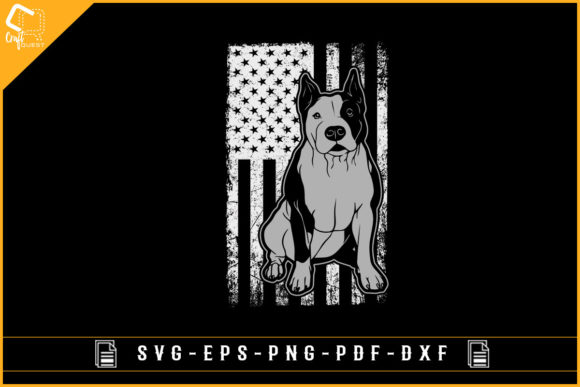
As someone who’s stitched hundreds of custom designs—from boutique baby onesies to Etsy shop patches—I opened USA Flag with Pitbull Dog Sublimation expecting boldness, patriotism, and personality. What I found was a confident, compact graphic that leans into pride and loyalty without tipping into cliché. It’s not just “flag + dog.” The pitbull is centered, upright, and composed—ears perked, chest forward—framed cleanly by the stars-and-stripes layout. There’s no cluttered banner, no forced slogan, no cartoonish exaggeration. That restraint makes it feel like a design built for real-world embroidery, not just digital display.
A tote bag test: where this design earns its keep
Last week, I prepped a batch of canvas tote bags for a local rescue fundraiser. We needed something instantly recognizable, emotionally resonant, and stitch-friendly at 4.5 inches wide—the standard front-panel hoop size for most small-batch apparel work. I loaded USA Flag with Pitbull Dog Sublimation into my embroidery software and scaled it to fit. Right away, the clean lines held up: the flag’s stripes remained distinct, the pitbull’s outline stayed crisp, and the star field didn’t collapse into a muddy fill. No pixelation, no jagged edges—even after resizing down from the original vector files (SVG, EPS, DXF). That’s a strong signal this wasn’t rushed through auto-trace. It’s crafted with vector integrity in mind, which translates directly to smoother satin stitch runs and tighter fill stitch transitions.
Where it shines—and where it asks for attention
This design works beautifully on mid-weight cottons and blends: think sweatshirt embroidery, embroidered patch backings, aprons, tea towels, and pillow covers. On a navy twill cap? Yes—but only if you’re using light thread and a tear-away stabilizer to prevent shadowing. On a thin baby onesie? Proceed carefully: reduce stitch density manually or risk puckering; skip dense fill areas near the dog’s muzzle unless you’re using ultra-soft poly thread and cutaway stabilizer underneath. On dark fabric? Test contrast first. The design relies on clear silhouette and shape—not fine interior detail—so black-on-red or white-on-navy reads strongly. But avoid pairing pale thread with charcoal fleece: the flag’s subtlety gets lost.
It’s also not ideal for curved surfaces with tight seams—like the bill of a structured baseball cap—unless you’re willing to split the design across two hoops or simplify the star field manually. And while the pitbull’s expression reads well at 3–5 inches, don’t push below 2.5 inches: the eye detail and jaw definition start to blur under standard machine embroidery resolution.
What it says about your brand—and your customers’ expectations
When you use USA Flag with Pitbull Dog Sublimation on a handmade product, you’re signaling alignment—not just with pitbull lovers, but with values: resilience, loyalty, community pride. That matters for Etsy sellers curating rescue-themed collections or small shops building identity around authenticity. Customers notice when a design feels intentional rather than clip-art recycled. This one avoids generic tropes: no paw prints overlaid haphazardly, no distressed filters slapped on post-export. Its balance gives your finished product weight—whether it’s a personalized gift for a military family with a rescue pitbull, holiday embroidery on a quilt block, or a boutique’s limited-run apron line.
That said, it doesn’t pretend to be delicate or whimsical. It won’t suit nursery decor aiming for soft watercolor vibes. It’s not a “cute” baby embroidery piece—it’s a statement. So if your craft business leans into bold, grounded, proudly American aesthetics, this fits like a well-worn glove. If your audience prefers minimalist linocut-style animals or vintage botanicals, pause and consider whether this matches your brand consistency.
Practical notes every embroidery designer should check before stitching
- Test on scrap fabric first—especially if using textured weaves or stretchy knits. The flag’s horizontal stripes can highlight even slight tension inconsistencies.
- Review stitch density in your software. Some versions of this design may include dense fill behind the dog’s body—reduce it slightly for breathable fabrics or baby items.
- Confirm hoop size compatibility. While scalable, the full composition lands best between 3.8" and 5.2". Below that, prioritize the dog’s head and flag staff; above, ensure your machine handles the width comfortably.
- Inspect small details in the star field and pitbull’s ear contours. They hold up well—but always zoom in at 200% before sending to the machine.
- Try black-and-white mockups to gauge contrast on light vs. dark backgrounds. This design gains strength in monochrome—it’s not reliant on color to communicate.
- Use appropriate stabilizer: cutaway for knits, tear-away for stable wovens, and lightweight fusible for lightweight linens.
- Check licensing before selling finished products or bundling the digital embroidery file. The listing states it’s for “Pitbull dog lovers” and “printable cutting files”—but commercial embroidery rights aren’t explicitly confirmed. When in doubt, contact the seller.
Final thought: a reliable, expressive asset—not a shortcut
USA Flag with Pitbull Dog Sublimation isn’t flashy, and it shouldn’t be. It’s the kind of design that earns repeat use because it delivers clarity, confidence, and quiet craftsmanship. It works for custom apparel, embroidered patch production, holiday embroidery bundles, and small shop merchandise—without demanding extra digitizing labor or extensive editing. For crafters, Etsy sellers, and handmade product makers who value both emotional resonance and technical reliability, it’s a thoughtful addition to your design assets. Just remember: even strong graphics need smart execution. Pair it with good thread choices, proper stabilizer, and a realistic sense of your fabric and hoop limits—and you’ll turn a simple digital embroidery file into something people proudly carry, wear, and gift.