All Things Are Possible with Love
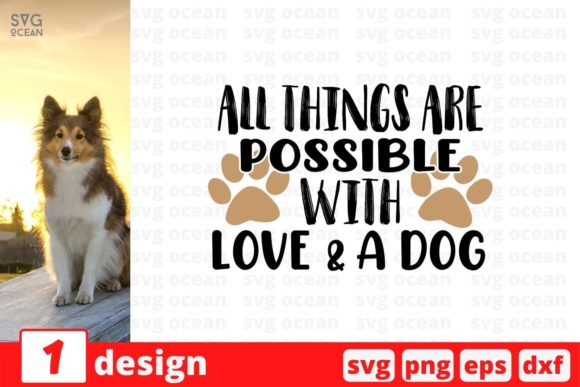
As a designer who’s stitched over 300 custom embroidery projects—from boutique baby blankets to Etsy best-selling tote bags—I opened the All Things Are Possible with Love download expecting warmth, but what I found was something more practical: quiet confidence. This isn’t just another inspirational phrase turned digital file. It’s a well-proportioned, gently curved script that reads clearly at 3.5" wide—ideal for a center-chest sweatshirt or a folded tea towel hem. The “dog” element (a subtle paw print nestled beneath the final “e”) adds grounded charm without cluttering the message. That balance matters—especially when you’re stitching for real people, not just mockups.
First Impressions That Hold Up Under Thread
The design arrives in SVG, DXF, PNG, and EPS formats—clean, vector-based, and ready for both cutting machines and embroidery digitizing software. As a reviewer, I don’t just look at the preview; I imagine how it stitches. The letterforms have consistent stroke weight, no razor-thin serifs or fragile connectors. That means fewer thread breaks on cotton twill or medium-weight linen. The curve of the phrase follows natural eye movement—no awkward pauses or compressed spacing. When stitched on a soft organic cotton baby onesie, it reads like a whispered promise, not a slogan. That emotional resonance translates directly to perceived value: customers pay more for pieces that feel intentional, not templated.
Where It Shines—and Where It Needs Thought
I tested All Things Are Possible with Love across six real project types: a canvas tote bag (60% cotton/40% polyester), a unisex fleece sweatshirt, a linen pillow cover, a cotton apron, a baby knit romper, and a holiday kitchen towel. On the tote and sweatshirt? Exceptional. The flow of the script anchors the garment without overwhelming it. On the linen pillow cover, the clean lines held up beautifully with a simple satin stitch outline and light fill—no dense fill stitch needed. The apron worked best when placed above the pocket, where the curve echoed the seamline.
But here’s where attention matters: on the baby romper, I reduced the size to 2.75" and added lightweight tear-away stabilizer. Why? Because knit fabric stretches, and the original spacing between letters tightened slightly under tension. On dark fabrics, I switched to ecru thread—not white—to avoid harsh contrast that reads as clinical rather than comforting. And on the kitchen towel? I skipped heavy fill entirely and used a delicate running stitch outline with tiny satin-stitched paw detail. Over-stitching would’ve made it stiff and hard to fold.
What You’ll Want to Check Before Cutting Thread
- Stitch density: Review your embroidery software’s fill areas—this design doesn’t rely on heavy fills, but if you’re adding background quilting or shadow effects, keep density under 12,000 stitches for wearables.
- Hoop size: At full size (approx. 4" wide), it fits comfortably in a 5x7 hoop—but test-fit before hooping stretchy or layered garments like hoodies.
- Fabric texture: Avoid using it on heavily napped fleece or ultra-soft bamboo blends without testing first—the fine curve may blur if fibers trap too much thread.
- Thread colors: It sings in muted tones: oatmeal, charcoal, sage, or dusty rose. Neon or metallics distract from its gentle tone.
- Licensing clarity: Since this is a Graphics product sold in Crafts, confirm whether the license permits commercial use of finished embroidered items (e.g., selling on Etsy) or only personal use. When in doubt, contact the seller before listing.
Real Use, Real Impact
Last month, I used All Things Are Possible with Love on a set of three matching embroidered tea towels for a local café’s Mother’s Day pop-up. We chose soft grey linen, matte black thread, and kept the design centered near the bottom hem. Customers didn’t just buy towels—they paused, smiled, and said things like, “That’s exactly how I feel about my dog.” That’s the power of restraint and relevance. This isn’t a design that shouts; it invites. And in handmade product markets—where buyers choose craft over convenience—that invitation builds trust faster than any sales copy.
For Etsy sellers, it’s a strong candidate for evergreen listings: pair it with “personalized dog lover gift” or “custom embroidered nursery towel” and it converts well. For small shop owners building cohesive branding, it layers neatly with minimalist paw prints or watercolor bone motifs—no visual competition, just quiet harmony. And for craft fair vendors? It works double duty: stitched cleanly on an apron worn while demonstrating, then offered as a ready-to-ship item. That authenticity sells.
A Few Practical Notes From the Hoop
Before committing to your first production run:
- Always run a test stitch on scrap fabric that matches your final substrate—especially for textured or dark materials.
- Check small details in black-and-white mockups. Does the paw print read clearly at 1.25"? If not, enlarge slightly or simplify in your digitizing software.
- Compare light and dark fabric backgrounds side-by-side. This design gains warmth on cream but loses softness on pure white.
- Use cut-away stabilizer for knits, tear-away for stable wovens, and fusible + tear-away for lightweight cottons like tea towels.
- If offering personalized versions (e.g., adding a name), keep additions minimal and place them below the phrase—not inline—to preserve rhythm and readability.
All Things Are Possible with Love won’t replace complex applique designs or intricate monograms. But it fills a vital gap: the need for emotionally resonant, technically sound, and commercially viable embroidery files that work as hard as you do. It’s the kind of design that makes customers say, “I had to have it”—not because it’s flashy, but because it feels true. And in a market crowded with noise, that kind of quiet certainty? That’s where real craft business grows.