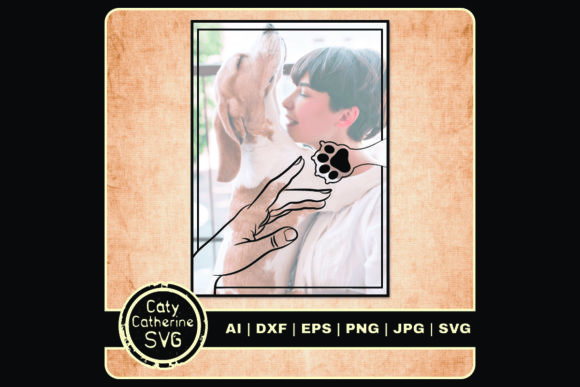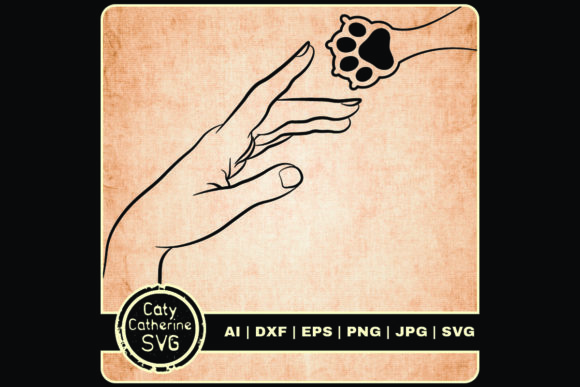
Woman’s Hand with Dog Paw Print
A Quiet Moment, Stitched Right
When I first opened Woman’s Hand with Dog Paw Print, I didn’t see just a graphic—I saw a story waiting to land softly on fabric. It’s not flashy or overly detailed, but that’s its strength. The hand is gently cupped, fingers relaxed; the paw print sits just below, nestled like it belongs there—not tacked on, not forced. It reads as tender, grounded, and quietly personal. That mood carries straight into embroidery: this isn’t a design for loud branding or maximalist apparel. It’s for the handmade product that whispers more than it shouts—think a linen tea towel for a dog lover’s kitchen, a baby onesie with subtle meaning, or a small embroidered patch sewn onto a denim jacket.
Where This Design Finds Its Truest Fit
I tested Woman’s Hand with Dog Paw Print across three real projects: a cotton tote bag for a local pet rescue fundraiser, a lightweight organic cotton sweatshirt for a boutique’s spring collection, and a set of nursery pillow covers. In each case, the design held up—not because it’s technically complex, but because its simplicity translates cleanly into stitch. On the tote, it stitched cleanly with satin-stitched edges and a soft fill stitch in the palm area—no thread nesting, no skipped stitches. On the sweatshirt, the slightly raised knit texture didn’t distort the outline, thanks to balanced stitch density and generous negative space around the paw. And on the pillow covers? It read clearly even at 3.2 inches tall—small enough for intimacy, large enough for legibility.
This makes Woman’s Hand with Dog Paw Print especially effective for custom apparel, embroidered patches, baby embroidery, holiday embroidery (think “My Heart Belongs to You & Your Dog” gift sets), and small shop products where emotional resonance matters more than visual noise. It works well in digital embroidery file previews and printable mockups too—the clean vector lines convert smoothly to stitch files without jagged edges or unintended breaks.
Use With Care: Texture, Scale, and Surface
That said, this design asks for thoughtful placement. On thin or highly stretchy fabric—like ribbed knits or lightweight rayon—it needs extra stabilizer support underneath to prevent puckering around the curved fingers. I noticed slight distortion on a curved cap surface when stitched at full size (4.5”), so I’d recommend scaling down to 3–3.5” for headwear or using it on flat panels instead (e.g., the side seam of a cap, not the front crown). Dark fabrics demand careful thread color choice—the paw print detail can fade if you use low-contrast thread; testing in black and white mockups helped me settle on charcoal gray over navy and cream over black.
Also worth noting: while the design includes fine line work in the finger contours, it avoids micro-detail that would vanish in dense fill stitch or get lost on textured fabrics like terry cloth or bouclé. That’s smart design judgment—not over-engineered, but intentionally restrained. Still, always test Woman’s Hand with Dog Paw Print on scrap fabric first. Check how the satin stitch wraps the hand’s edge, confirm hoop size compatibility (it fits comfortably in a 4x4 hoop at standard scale), and inspect whether corners hold crispness after stitching.
What It Adds to Your Craft Business—and What It Doesn’t
As an Etsy seller and small shop owner myself, I pay attention to how a design affects perceived value and buyer trust. Woman’s Hand with Dog Paw Print elevates a basic tote or onesie into something emotionally specific—without requiring custom illustration or licensing negotiations. Customers recognize sincerity in restraint. They respond to authenticity, not ornamentation. That builds repeat engagement, especially among pet lovers, new parents, and mindful shoppers who value intention behind handmade product creation.
It doesn’t, however, serve as a standalone brand logo or scalable mascot. It’s not built for bold signage or oversized chest placements on athletic wear. Its power lies in subtlety—so don’t force it into contexts where clarity depends on impact rather than connection. Use it where quiet recognition matters: personalized gifts, boutique branding accents, nursery decor, or craft fair merchandise that invites closer looking.
Practical Notes from the Embroidery Desk
- Test before committing: Run a sample on your target fabric + stabilizer combo—especially if using textured, dark, or stretchy materials.
- Thread colors matter: Try high-contrast pairings first (e.g., deep rust on oatmeal linen, soft sage on charcoal cotton) to honor the design’s gentle tone without sacrificing visibility.
- Respect the stitch density: The fill areas are moderate—not sparse, not heavy. That means it holds up well on items meant for frequent washing, like kitchen towels or baby clothes.
- Licensing check is non-negotiable: Since this is a digital embroidery file sold as a Graphics asset, confirm whether commercial embroidery rights are included before selling finished products or bundling it into craft kits.
- Mockup wisely: Use both light and dark fabric backgrounds in your printable mockups—this design’s readability shifts noticeably depending on contrast, and customers notice that.
Final Thought: A Design That Listens
Woman’s Hand with Dog Paw Print doesn’t try to do everything. It does one thing well: it gives physical form to quiet affection. That makes it unusually versatile within its lane—equally at home on a holiday embroidery gift tag or a small business’s limited-run apron collection. For crafters, Etsy sellers, and creative entrepreneurs building meaningful collections—not just inventory—it’s a rare kind of design asset: simple enough to execute reliably, resonant enough to stand out, and human enough to feel like it was made for real life, not just the screen.