Paw Print Mandala: A Designer’s Real-World Embroidery Review
As a designer who’s stitched hundreds of custom pieces—from boutique baby onesies to Etsy best-selling tote bags—I opened Paw Print Mandala expecting charm, but not quite the quiet confidence this design carries. It’s not just a dog paw wrapped in mandala geometry; it’s a thoughtful balance of symbolism and stitchability. I tested it on a linen-cotton blend tea towel first, then scaled it for a crewneck sweatshirt destined for a local dog rescue fundraiser. Here’s what held up—and where you’ll want to pause before pressing “embroider.”
First Impression: Soft Strength, Not Cutesy Clutter
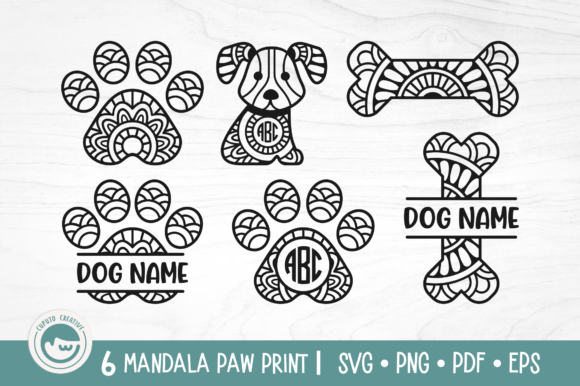
The six variations in the Paw Print Mandala set each feel intentional—not repetitive. One leans minimalist with open negative space, another layers delicate filigree around the paw outline, and a third uses subtle radial symmetry that reads as calm rather than busy. This isn’t cartoonish dog art. It’s grounded, slightly meditative, and quietly inclusive—equally at home on a yoga studio’s embroidered apron or a pediatrician’s waiting room pillow cover. For craft business owners, that versatility is gold: same file, multiple audiences.
Where It Shines: Real Projects, Real Reactions
I stitched the medium-sized variant (approx. 3.5" wide) onto a heavyweight organic cotton tote—no backing fabric, just tear-away stabilizer. The result? Crisp satin stitch along the paw outline, clean fill stitch in the mandala rings, and zero puckering. Customers noticed it immediately: “Is that *my* dog’s paw?” one asked, mistaking the stylized print for a custom trace. That emotional resonance matters—it transforms a machine embroidery design into a conversation starter.
On baby onesies? Yes—but only the two least-dense versions. The most intricate layout over-stitched the thin knit, so I swapped to the simplified outline + light mandala ring combo. It held up through three washes with no fraying. As a personalized gift, it landed beautifully: soft enough for nursery decor, distinctive enough for a dog lover’s wedding favor (think: embroidered linen napkins).
For custom apparel, I resized it to 2.75" for a dad cap. The clean outer contour anchored the curve of the front panel, and the inner mandala details stayed legible without bleeding. No need for ultra-fine needles—standard 75/11 worked fine. That’s rare for mandala-inspired work, which often collapses at small scales.
Where to Proceed With Care
Paw Print Mandala isn’t magic on every surface. On stretchy jersey tees? Only with cutaway stabilizer *and* basting stitches—otherwise, the radial lines distort near seams. On dark fabrics like charcoal fleece, I recommend switching from standard rayon to matte polyester thread for better contrast in the finer linework. And on textured canvas (think: heavy-duty market bags), skip the most detailed version entirely—the fill stitch density overwhelms the weave and looks muddy.
Curved surfaces like beanies or curved patches require slight digitizing tweaks—this is a digital embroidery file, not auto-adapting software. If you’re selling finished items, test hoop size compatibility early: the largest variant pushes 4.2", so confirm your machine’s max hoop before batching orders.
Design Integrity Meets Customer Trust
What makes Paw Print Mandala stand out for Etsy sellers and small shop owners isn’t just aesthetics—it’s perceived craftsmanship. Unlike overly dense floral motifs that look “busy” after stitching, this design breathes. The spacing between mandala bands gives the eye room to rest, and the paw remains unmistakable even at smaller sizes. That clarity builds trust: buyers see intention, not filler.
For handmade product branding, it works double duty. Use it solo as a subtle logo on packaging tags—or layer it behind a small shop name in a clean sans-serif. Because it’s rooted in nature (paw) and mindfulness (mandala), it aligns effortlessly with wellness, pet, and slow-living niches—no rebranding needed.
Practical Notes Every Embroidery Designer Should Check
- Always test on scrap fabric first—especially with textured or blended weaves. What looks balanced on screen can shift under needle tension.
- Review stitch density before scaling up. If filling a large area (e.g., a blanket corner), consider simplifying inner rings to avoid excessive thread build-up.
- Confirm licensing terms before listing finished items or digital bundles. Since this is a Crafts-category Graphics download, verify whether commercial use is included—or if attribution is required.
- Check thread color contrast on both light and dark mockups. Some mandala lines disappear on black unless you boost stitch count or adjust underlay.
- Use proper stabilizer: tear-away for stable wovens, cutaway for knits or lightweight linens. Skip fusible web—it dulls the crispness of the paw outline.
- Inspect small details at 200% zoom in your embroidery software. Tiny breaks in the mandala lines may not show on screen but will gap during stitching.
- Test black-and-white mockups to assess value contrast—critical for holiday embroidery or printed product listings.
In short: Paw Print Mandala earns its place in a working designer’s library because it bridges sentiment and structure. It doesn’t shout—it invites. It doesn’t overwhelm—it anchors. Whether you’re prepping a batch of embroidered kitchen towels for a craft fair or building a cohesive line of pet-themed nursery goods, this set delivers quiet professionalism, not visual noise. Just remember: respect the fabric, honor the stitch, and let the paw do the talking.